"Volumeguide 2, your ultimate hub for fashion, hobbies and inspiration needed to find freedom to grow, be inspired and get motivated into an overflowing life."

Archive for the ‘Inspiration’ Category

God Hears You: 8 Powerful Bible Truths About Prayer

Believe That God Hears You: Trusting His Voice, His Timing, and His Promises

“The righteous cry, and the LORD heareth, and delivereth them out of all their troubles.” — Psalm 34:17 (KJV)

Introduction: God Is Listening, Even When Heaven Seems Silent

Have you ever prayed about something so deeply that you wondered whether God was listening? Perhaps you have cried out to Him during a difficult season, asked for direction, or waited for an answer that seemed to take forever.

Sometimes, when our prayers are not answered as quickly as we hope, doubt begins to creep into our hearts. We may wonder, Does God hear me? Does He see what I am going through? Does He care about what concerns me?

The wonderful truth found throughout Scripture is that God hears His children. He is not distant, distracted, or unaware of our circumstances. He knows our hearts, understands our struggles, and invites us to bring everything before Him in prayer.

Believing that God hears you requires faith, especially when His response is not immediately visible.

Let’s explore what the Bible teaches about trusting that God hears our prayers.

1. Have Confidence That God Hears Your Prayers

Scripture: 1 John 5:14–15 (KJV)

“And this is the confidence that we have in him, that, if we ask any thing according to his will, he heareth us: And if we know that he hear us, whatsoever we ask, we know that we have the petitions that we desired of him.”

One of the greatest blessings of having a relationship with God is knowing that we can approach Him confidently.

Notice that Scripture does not tell us to hope God hears us. It tells us that we can have confidence in Him.

However, there is an important condition in this passage: we must pray according to His will.

Prayer is not simply about convincing God to give us what we want. It is about bringing our desires before Him while trusting His wisdom and surrendering to His purpose.

When we pray according to God’s will, we can trust that He hears us and will respond according to His perfect wisdom.

Faith reminder: You do not have to wonder whether God is capable of hearing your prayers. Trust His Word, even when you cannot yet see His answer.

2. God Hears You Before You Finish Speaking

Scripture: Isaiah 65:24 (KJV)

“And it shall come to pass, that before they call, I will answer; and while they are yet speaking, I will hear.”

What a beautiful picture of God’s attentiveness!

In Isaiah 65, God describes the blessings of His promised restoration. This verse reveals His willingness to respond to His people.

God does not need lengthy explanations to understand what is happening in our lives. He already knows our needs.

Jesus reinforces this truth in Matthew 6:8:

“For your Father knoweth what things ye have need of, before ye ask him.”

Think about that for a moment.

Before you speak a single word, God already knows what is troubling your heart. Before your tears begin to fall, He understands the pain behind them.

Yet He still invites you to pray because prayer strengthens your relationship with Him.

Faith reminder: Prayer is not about informing God of something He does not know. It is about trusting Him with what He already sees.

3. God’s Silence Does Not Mean His Absence

Scripture: Psalm 13:1 (KJV)

“How long wilt thou forget me, O LORD? for ever? how long wilt thou hide thy face from me?”

Even David, a man after God’s own heart, experienced moments when he felt forgotten.

David’s words remind us that faithful believers can experience seasons of uncertainty.

Sometimes we pray, wait, and hear nothing.

But silence is not proof that God has abandoned us.

Consider the story of Hannah in 1 Samuel 1:10–20. Hannah desperately desired a child. She prayed with bitterness of soul and wept before the Lord.

Her circumstances did not change immediately, but she continued bringing her burden before God.

In time, God answered her prayer, and Samuel was born.

Hannah’s story reminds us that our tears are not meaningless and that waiting does not automatically mean rejection.

Faith reminder: Do not measure God’s presence by how quickly your circumstances change.

4. God Hears the Prayers of the Brokenhearted

Scripture: Psalm 34:18 (KJV)

“The LORD is nigh unto them that are of a broken heart; and saveth such as be of a contrite spirit.”

There are moments when life becomes so overwhelming that finding the right words to pray feels impossible.

Grief, disappointment, loneliness, and uncertainty can leave us feeling spiritually exhausted.

But God does not require perfect words before He listens.

Romans 8:26 tells us that the Holy Spirit helps us in our weaknesses, including when we do not know what we should pray.

God understands the prayers spoken through tears, the whispered cries for help, and the burdens we struggle to express.

Psalm 56:8 also describes God’s awareness of our tears.

What comfort it is to know that our pain does not go unnoticed by our Heavenly Father.

Faith reminder: When your heart is too heavy to form a prayer, remember that God knows your heart.

5. Believe That God Responds in His Perfect Timing

Scripture: Ecclesiastes 3:11 (KJV)

“He hath made every thing beautiful in his time…”

One of the most challenging parts of prayer is waiting.

We may want an immediate answer, but God sees what we cannot see.

His wisdom extends beyond our present circumstances.

Consider Lazarus in John 11.

When Mary and Martha sent word that their brother was sick, Jesus did not arrive immediately. By the time He reached Bethany, Lazarus had been dead four days.

From a human perspective, it appeared that Jesus had come too late.

But Jesus had a greater purpose.

In John 11:40, Jesus said to Martha:

“Said I not unto thee, that, if thou wouldest believe, thou shouldest see the glory of God?”

Jesus then raised Lazarus from the dead.

This extraordinary miracle reminds us that God’s power is not limited by human expectations.

Of course, not every situation will end with the miracle we desire. Nevertheless, we can trust God’s wisdom, goodness, and presence even when the outcome differs from our prayers.

Faith reminder: God’s timing may not match your expectations, but His wisdom is greater than your understanding.

6. Pray With Faith, Not Fear

Scripture: Mark 11:24 (KJV)

“Therefore I say unto you, What things soever ye desire, when ye pray, believe that ye receive them, and ye shall have them.”

Jesus teaches us the importance of faith in prayer.

Faith means approaching God with confidence in His ability and character.

It does not mean pretending that difficulties do not exist. It means believing that God remains powerful and trustworthy despite them.

James 1:6 also teaches us to ask in faith without wavering.

However, biblical faith is not a guarantee that every personal desire will be fulfilled exactly as requested. True faith trusts God’s will, even when His answer is different from what we expected.

Jesus demonstrated this surrender in the Garden of Gethsemane.

Luke 22:42 (KJV):

“Father, if thou be willing, remove this cup from me: nevertheless not my will, but thine, be done.”

Even in His suffering, Jesus submitted to the Father’s will.

Our prayers should reflect that same trust.

Faith reminder: Believe in God’s power to answer, and trust His wisdom in how He answers.

7. Keep Praying and Never Give Up

Scripture: Luke 18:1 (KJV)

“And he spake a parable unto them to this end, that men ought always to pray, and not to faint.”

Jesus told the parable of the persistent widow to encourage believers to remain steadfast in prayer.

Her persistence teaches us not to lose heart.

There may be situations that require us to pray repeatedly, not because God has forgotten, but because prayer helps us remain dependent on Him.

Philippians 4:6–7 encourages believers to bring their requests to God with thanksgiving and promises that His peace will guard their hearts and minds through Christ Jesus.

Even before our circumstances change, prayer can change how we face them.

We can exchange anxiety for trust, fear for peace, and discouragement for renewed hope.

Faith reminder: Keep praying, keep believing, and keep trusting God. Your prayers matter to Him.

8. Remember That God Is Attentive to the Righteous

Scripture: 1 Peter 3:12 (KJV)

“For the eyes of the Lord are over the righteous, and his ears are open unto their prayers: but the face of the Lord is against them that do evil.”

God desires a sincere relationship with His people.

Prayer should not be separated from how we live.

Psalm 66:18 warns about cherishing sin in our hearts, while Proverbs 15:29 teaches that the Lord hears the prayer of the righteous.

These passages encourage us to approach God with humility, repentance, and obedience.

This does not mean we must be perfect before we can pray. Through Jesus Christ, we are invited to come boldly before the throne of grace.

Hebrews 4:16 reminds us that we can receive mercy and find grace to help us in times of need.

God welcomes the repentant heart.

Faith reminder: Come to God sincerely. His mercy is greater than your failures, and His grace is available through Jesus Christ.

How to Strengthen Your Belief That God Hears You

When doubt begins to rise, practice these five habits:

  1. Read God’s promises daily. Meditate on 1 John 5:14–15, Psalm 34:17, and Jeremiah 33:3.
  2. Keep a prayer journal. Write down your requests and record the ways God works in your life.
  3. Pray with thanksgiving. Thank God for His faithfulness, even while waiting.
  4. Remember past testimonies. Reflect on moments when God provided strength, direction, or unexpected help.
  5. Surrender the outcome. Trust that God’s wisdom is greater than your own understanding.

The more time we spend in God’s Word, the more we learn to recognize His faithfulness.

A Prayer for Confidence That God Hears Me

Heavenly Father,

Thank You for being a loving and attentive God. Thank You for hearing my prayers, knowing my heart, and understanding every burden I carry.

Lord, forgive me for the times I have allowed doubt to overpower my faith. When answers seem delayed, help me remember that You are still present.

Teach me to pray according to Your will and to trust Your wisdom above my own understanding.

When I am discouraged, strengthen my heart. When I am afraid, remind me of Your promises. When I feel forgotten, help me remember that Your Word declares You are near to the brokenhearted.

Father, give me patience while I wait, peace when I do not understand, and confidence that You are working according to Your perfect purpose.

I choose to believe that You hear me, that You care for me, and that Your love never fails.

In Jesus’ mighty name, Amen.

Final Encouragement: God Hears You, So Keep Believing

You may not always understand God’s timing. You may not receive the answer you expected. And there may be days when your faith feels weaker than usual.

But remember this:

God’s faithfulness is not determined by your circumstances.

He is still God when the answer is yes.

He is still God when the answer is no.

And He is still God when the answer is wait.

Your responsibility is not to control the outcome. Your responsibility is to trust the One who holds your life in His hands.

Psalm 116:1–2 (KJV)

“I love the LORD, because he hath heard my voice and my supplications. Because he hath inclined his ear unto me, therefore will I call upon him as long as I live.”

Let these words become your personal declaration.

I believe God hears me. I believe He cares about me. I believe His Word is true. And even when I cannot see what He is doing, I will continue to trust Him.

Keep praying. Keep believing. God hears you.


Reflection Questions

  • Have I allowed unanswered prayers to make me question whether God hears me?
  • What Scriptures can I meditate on when doubt begins to rise?
  • Am I willing to trust God’s answer even when it differs from my expectations?
  • How has God demonstrated His faithfulness in my life?

Scriptures for Further Study

  • Jeremiah 29:12 — God listens when His people call upon Him.
  • Jeremiah 33:3 — God’s invitation to call upon Him.
  • Psalm 145:18–19 — The Lord is near to those who call upon Him in truth.
  • Matthew 7:7–11 — Jesus teaches about asking, seeking, and knocking.
  • John 9:31 — The importance of reverence and obedience toward God.
  • Hebrews 11:6 — Faith and diligently seeking God.
  • Philippians 4:6–7 — Prayer, thanksgiving, and God’s peace.

The Confident Businesswoman: A Woman of Faith, Wisdom, and Purpose

A Biblical Perspective on Confidence, Leadership, and Entrepreneurship

The Bible paints a powerful picture of a confident businesswoman. She is not afraid to work, make decisions, manage resources, pursue opportunities, or build something meaningful. Her confidence is not rooted in pride, wealth, or recognition, but in her faith in God, the wisdom He provides, and the purpose He has placed in her life.

One of the greatest biblical examples of a confident businesswoman is found in Proverbs 31.

1. She knows her worth and walks in confidence

Proverbs 31:25 (KJV)

“Strength and honour are her clothing; and she shall rejoice in time to come.”

The confident businesswoman understands that her worth is not determined by how much money she makes, how many customers she has, or how successful her competitors appear.

She clothes herself with strength, dignity, and faith.

She can face tomorrow with confidence because she trusts God with her future.

Business lesson: Don’t allow fear, rejection, or comparison to determine your value. Your worth is greater than your business performance.

2. She recognizes opportunities and takes action

Proverbs 31:16 (KJV)

“She considereth a field, and buyeth it: with the fruit of her hands she planteth a vineyard.”

Notice something remarkable about this woman.

She evaluates an opportunity, makes a purchasing decision, and invests in something that can produce future value.

She doesn’t simply dream about possibilities. She takes action.

This passage demonstrates financial decision-making, planning, investment, and initiative.

Business lesson: A confident businesswoman does her research, considers the risks, and makes wise decisions rather than allowing fear to keep her from moving forward.

3. She understands the value of her work

Proverbs 31:18 (KJV)

“She perceiveth that her merchandise is good: her candle goeth not out by night.”

This woman recognizes the quality and value of what she produces.

She is not ashamed of her work or afraid to acknowledge that it is good.

For today’s businesswoman, this is an important reminder: You can be humble and still be confident in your abilities.

Business lesson: Don’t constantly undervalue your products, services, creativity, or expertise. Charge fairly, deliver quality, and recognize the value you bring to others.

4. She plans carefully and works diligently

Proverbs 21:5 (KJV)

“The thoughts of the diligent tend only to plenteousness; but of every one that is hasty only to want.”

Confidence does not mean making careless decisions.

A wise businesswoman understands that preparation, consistency, and discipline are essential.

She develops plans, establishes goals, manages her time, and follows through on her responsibilities.

Business lesson: Prayer and planning belong together. Pray for direction, develop a strategy, and faithfully do the work.

5. She is courageous when facing challenges

Joshua 1:9 (KJV)

“Have not I commanded thee? Be strong and of a good courage; be not afraid, neither be thou dismayed: for the LORD thy God is with thee whithersoever thou goest.”

Although God originally spoke these words to Joshua as he prepared to lead Israel, the passage reveals an important biblical principle about courage and dependence on God.

Business requires courage.

There may be seasons when customers are few, finances are tight, or opportunities seem uncertain.

A confident businesswoman doesn’t pretend challenges don’t exist. She faces them with wisdom, perseverance, and prayer.

Business lesson: Courage is not the absence of fear. It is the willingness to move forward faithfully even when the outcome is uncertain.

6. She conducts business with honesty and integrity

Proverbs 11:1 (KJV)

“A false balance is abomination to the LORD: but a just weight is his delight.”

God cares about how business is conducted, not simply how much profit it generates.

A godly businesswoman practices honesty in her pricing, communication, promises, and financial dealings.

She doesn’t need to deceive others to become successful.

Business lesson: Build a business that customers can trust. Your integrity is worth more than a dishonest sale.

7. She uses her success to bless others

Proverbs 31:20 (KJV)

“She stretcheth out her hand to the poor; yea, she reacheth forth her hands to the needy.”

The Proverbs 31 woman is productive and resourceful, but she is also generous.

Her accomplishments do not cause her to forget the needs of others.

Her work becomes a way to provide, serve, and make a difference.

Business lesson: Success is not measured by income alone. Consider how your business can improve lives, create opportunities, and serve your community.

8. She puts God first in her business

Proverbs 16:3 (KJV)

“Commit thy works unto the LORD, and thy thoughts shall be established.”

The confident businesswoman understands that God is the foundation of her life.

She seeks His wisdom before making major decisions and commits her plans to Him.

This does not mean every business venture will succeed or every prayer will produce immediate financial results.

It means she can pursue her work with faith while trusting God through both success and disappointment.

Business lesson: Let God’s principles guide your decisions, not just the desire for profit.

Five Scriptures Every Confident Businesswoman Should Remember

Proverbs 31:25

I can walk in strength and dignity.

Philippians 4:13

Christ strengthens me for what I am called to face.

James 1:5

I can ask God for wisdom when making decisions.

2 Timothy 1:7

Fear does not have to control my actions.

Colossians 3:23

I can work wholeheartedly as an act of service to God.

A Prayer for the Confident Businesswoman

Heavenly Father,

Thank You for the gifts, talents, creativity, and opportunities You have given me.

Teach me to walk confidently in the purpose You have placed before me. Give me wisdom to make sound decisions, courage to pursue worthwhile opportunities, and patience when progress seems slow.

Help me never to confuse confidence with pride or success with personal worth.

Let integrity guide my business, excellence shape my work, and generosity remain in my heart.

When fear arises, remind me that I can seek Your strength. When challenges come, help me remain faithful. When success comes, keep me humble and grateful.

May the work of my hands honor You and become a blessing to others.

In Jesus’ name, Amen.

Final Thought: She Is Confident Because She Knows Who Guides Her

The biblical businesswoman is not described as helpless, timid, or incapable.

She is industrious, thoughtful, courageous, generous, and wise.

She buys property, produces merchandise, manages resources, serves her household, and helps others.

And Proverbs 31:30 reminds us of the foundation beneath her character:

“Favour is deceitful, and beauty is vain: but a woman that feareth the LORD, she shall be praised.”

Her greatest strength is not that she owns a business. It is that she honors God in the way she lives and works.

Jesus and His Brothers and Sisters: From Family Doubt to Faith in the Savior

Understanding the earthly family of Jesus and the powerful transformation of His brothers

Key Scripture: Mark 6:3 (KJV)

“Is not this the carpenter, the son of Mary, the brother of James, and Joses, and of Juda, and Simon? and are not his sisters here with us? And they were offended at him.”

Did Jesus Have Brothers and Sisters?

When we think about Jesus Christ, we often picture Him teaching His disciples, healing the sick, performing miracles, and fulfilling His Father’s will. But have you ever wondered what His relationship was like with His earthly family?

Jesus grew up in a household surrounded by family. Scripture identifies four men as His brothers: James, Joses (Joseph), Simon, and Judas (Jude). The Bible also mentions His sisters, although their names and number are not recorded.

Matthew 13:55–56 tells us:

“Is not this the carpenter’s son? is not his mother called Mary? and his brethren, James, and Joses, and Simon, and Judas? And his sisters, are they not all with us?”

These passages show that Jesus had close family relationships during His earthly life.

Christians interpret these family relationships differently. Many Protestant traditions understand these individuals as younger children of Mary and Joseph, making them Jesus’ half-siblings because of His virgin birth. Catholic and Orthodox traditions generally understand them as other relatives or, in some Orthodox interpretations, Joseph’s children from an earlier marriage.

Regardless of these interpretations, the Scriptures reveal something remarkable: Those closest to Jesus did not all immediately recognize who He truly was.

1. Jesus’ Brothers Did Not Initially Believe in Him

One of the most surprising revelations about Jesus’ family appears in John 7:5.

“For neither did his brethren believe in him.”

Imagine growing up in the same household as Jesus, sharing meals, experiencing family responsibilities, and witnessing His character, yet not fully understanding His divine identity.

Jesus’ brothers knew Him as a member of their family. However, knowing someone personally is not the same as recognizing God’s purpose for their life.

In John 7:3–4, His brothers challenged Him:

“Depart hence, and go into Judaea, that thy disciples also may see the works that thou doest.”

They continued by suggesting that if He performed such works, He should reveal Himself publicly.

Jesus answered in John 7:6:

“My time is not yet come: but your time is alway ready.”

This conversation reveals an important difference between Jesus and His brothers. They were thinking about public recognition, while Jesus was following the divine timing of His Father.

Spiritual lesson: Sometimes those closest to us may not understand what God has called us to do. But their lack of understanding does not change God’s purpose.

2. His Family Was Concerned About His Ministry

As Jesus began preaching, healing, and gathering followers, His ministry attracted enormous attention.

Mark 3:20–21 describes a moment when the crowds became so overwhelming that Jesus and His disciples could not even eat.

Scripture tells us:

“And when his friends heard of it, they went out to lay hold on him: for they said, He is beside himself.” — Mark 3:21 (KJV)

The word translated as “friends” can also refer to His own people or relatives. The passage suggests that those close to Jesus were concerned about what was happening.

Later, Mark 3:31–32 records that His mother and brothers arrived while He was teaching and stood outside, sending someone to call Him.

Jesus responded with a profound spiritual truth.

3. Jesus Taught That Spiritual Family Is Built Through Obedience to God

In Mark 3:33–35, Jesus asked:

“Who is my mother, or my brethren?”

Then, looking at those gathered around Him, He declared:

“For whosoever shall do the will of God, the same is my brother, and my sister, and mother.”

Jesus was not denying His earthly family or suggesting that family relationships were unimportant.

Instead, He was revealing something greater: belonging to God’s spiritual family is not determined by blood relationships, family names, or earthly connections.

It is connected to our relationship with God and our response to His will.

This teaching reminds us that through Christ, believers become members of a spiritual family united by faith.

Spiritual lesson: Our relationship with Jesus is not based on how close we are to religious traditions or people, but on genuine faith that leads us to follow God.

4. Jesus Was Rejected in His Own Hometown

In Mark 6:1–6, Jesus returned to His hometown of Nazareth and taught in the synagogue.

The people were astonished by His wisdom and mighty works. Yet instead of receiving Him with faith, many questioned His authority.

They knew His mother, His brothers, and His sisters. They remembered Him as the carpenter.

Jesus responded:

“A prophet is not without honour, but in his own country, and among his own kin, and in his own house.” — Mark 6:4 (KJV)

These words reveal the painful reality that familiarity can sometimes prevent people from recognizing God’s work.

Those who had known Jesus in ordinary family and community life struggled to understand His extraordinary calling.

How often do we overlook what God is doing because it comes through someone familiar?

We must be careful not to allow our assumptions about people to blind us to God’s purpose.

5. After the Resurrection, Everything Changed

Perhaps the most powerful part of this story is what happened after Jesus rose from the dead.

Before the resurrection, John 7:5 tells us that His brothers did not believe in Him.

But after His resurrection and ascension, Acts 1:14 records something remarkable:

“These all continued with one accord in prayer and supplication, with the women, and Mary the mother of Jesus, and with his brethren.”

His brothers were now gathered with the believers in prayer.

What a beautiful transformation!

Those who had once questioned Jesus were now united with His followers.

Scripture does not record every conversation or experience that brought about this change, but it does give us an important clue.

Jesus Appeared to James

In 1 Corinthians 15:7, the apostle Paul writes:

“After that, he was seen of James; then of all the apostles.”

This is commonly understood as a reference to James, the brother of Jesus.

Although the Bible does not reveal the words spoken during this appearance, we can recognize its significance.

James, who had once belonged to a family whose brothers did not believe in Jesus, later became a prominent leader in the Jerusalem church.

Galatians 1:19 identifies him as “James the Lord’s brother.”

In Acts 15:13–21, James plays an important role in the Jerusalem council, helping guide the early church through a difficult question concerning Gentile believers.

The transformation is extraordinary.

The brother who once knew Jesus primarily through an earthly family relationship became a devoted servant of the risen Lord.

6. James and Jude Became Servants of Jesus Christ

Two New Testament letters are traditionally associated with Jesus’ brothers: James and Jude.

Notice how they introduce themselves.

James 1:1 states:

“James, a servant of God and of the Lord Jesus Christ, to the twelve tribes which are scattered abroad, greeting.”

Jude 1:1 begins:

“Jude, the servant of Jesus Christ, and brother of James, to them that are sanctified by God the Father, and preserved in Jesus Christ, and called.”

7. What About Jesus’ Sisters?

Neither writer emphasizes an earthly family connection to Jesus as a claim to spiritual authority.

Instead, both identify themselves as servants of Christ.

What humility!

Their identity was no longer simply connected to growing up in the same family as Jesus. Their lives were now devoted to serving Him as Lord.

James taught about faith, patience, wisdom, humility, and obedience. Jude urged believers to remain faithful and defend the truth of the gospel.

Their writings continue to encourage Christians today.

Although Matthew 13:56 and Mark 6:3 mention Jesus’ sisters, the Bible provides very little additional information about them.

Their names, personal conversations with Jesus, and later spiritual experiences are not recorded.

We should be careful not to create stories that Scripture does not provide.

However, their mention reminds us that Jesus experienced real family relationships during His earthly life.

He understood the ordinary experiences of living among relatives, neighbors, and members of a community.

Hebrews 4:15 reminds us that Jesus understands our human weaknesses and experiences, yet He remained without sin.

This should encourage us to approach Him confidently in prayer.

8. What Can We Learn From Jesus’ Relationship With His Family?

The story of Jesus and His brothers teaches several powerful lessons.

Faith can grow where doubt once existed.

Jesus’ brothers did not initially believe in Him, yet some later became devoted followers. We should never assume that someone who struggles with faith today cannot become a strong believer tomorrow.

God’s timing is greater than human expectations.

When His brothers encouraged Him to make Himself publicly known, Jesus remained committed to His Father’s timing.

Family relationships do not replace personal faith.

Even those who knew Jesus personally needed to recognize Him as Lord. Each of us must respond to Christ in faith.

Spiritual transformation is possible.

James’ journey from unbelief to leadership in the early church reminds us that God can change hearts and redirect lives.

True greatness is found in serving Christ.

James and Jude did not build their messages around their family connections. They presented themselves as servants of Jesus Christ.

Final Reflection: From Knowing About Jesus to Truly Knowing Him

The story of Jesus and His brothers and sisters is more than a family history. It is a testimony about faith, revelation, patience, and spiritual transformation.

His brothers lived in the same family setting as Jesus, yet they did not immediately recognize Him as the promised Savior.

But the resurrection changed everything.

The same Jesus they had known through everyday family life was revealed as the risen Lord.

And that brings us to a question worth considering:

Do we merely know about Jesus, or have we truly come to know Him as our Lord and Savior?

We may attend church, read Scripture, and know the stories of Jesus. Yet the most important relationship we can have with Him is one built upon genuine faith, love, and obedience.

Let the testimony of His brothers encourage you. Doubt does not have to be the end of the story. Through the grace of God, hearts can change, faith can grow, and lives can be transformed.

Closing Prayer

Heavenly Father,

Thank You for revealing Your Son, Jesus Christ, through the Scriptures. Help us to know Him beyond what we have heard or learned from others. Open our hearts to recognize His truth, trust His timing, and obey His Word.

Strengthen our faith when we struggle with doubt. Help us to show patience and love toward family members who have not yet come to believe. May our lives reflect the transforming power of the risen Savior.

Teach us to serve Jesus with humility, just as James and Jude did, and to remain faithful to Your calling.

In the mighty name of Jesus, Amen.


Scriptures for Further Study

  • Matthew 13:53–58 — Jesus’ family and the rejection in Nazareth
  • Mark 3:20–35 — Jesus’ family and His teaching about spiritual relationships
  • Mark 6:1–6 — Jesus’ brothers and sisters mentioned
  • John 7:1–10 — The unbelief of Jesus’ brothers
  • Acts 1:12–14 — Jesus’ brothers join the believers in prayer
  • 1 Corinthians 15:3–8 — The risen Christ appears to James
  • Galatians 1:18–19 — James identified as the Lord’s brother
  • Acts 15:13–21 — James’ leadership in the Jerusalem church
  • James 1:1 — James identifies himself as a servant of Christ
  • Jude 1:1 — Jude identifies himself as a servant of Christ

CreativeKind Living | Growing in Faith, Walking in Truth, and Living with Purpose

May we never be satisfied with simply knowing about Jesus, but continually seek to know Him more deeply through His Word.

“A Life of Praise: 7 Beautiful Ways to Glorify God Every Day”

Praise Is More Than a Song

Praising God is one of the greatest privileges we have as believers. It is more than singing a beautiful worship song on Sunday morning. Praise is an expression of love, gratitude, reverence, and faith toward our Heavenly Father.

Every new morning is another opportunity to lift His name, acknowledge His goodness, and celebrate His faithfulness.

God deserves our praise not only because of what He has done, but because of who He is. He is our Creator, Provider, Protector, Redeemer, and everlasting Father.

Here are seven powerful, Scripture-supported ways to praise God every day.

1. Praise God With Your Voice

Psalm 34:1 (KJV)

“I will bless the LORD at all times: his praise shall continually be in my mouth.”

Our voices are instruments of praise. We can glorify God through prayer, singing, speaking His Word, and sharing testimonies of His goodness.

Don’t wait until everything is perfect to praise Him. Praise Him in the morning, throughout the day, and even during life’s difficult seasons.

2. Praise God With a Thankful Heart

Psalm 100:4 (KJV)

“Enter into his gates with thanksgiving, and into his courts with praise: be thankful unto him, and bless his name.”

Gratitude opens our hearts to recognize God’s blessings. Sometimes we become so focused on what we lack that we overlook what God has already provided.

Thank Him for life, strength, forgiveness, daily provision, and the blessings we sometimes take for granted.

A grateful heart makes room for continual praise.

3. Praise God Through Obedience

John 14:15 (KJV)

“If ye love me, keep my commandments.”

One meaningful way to honor God is through obedience to His Word.

When we choose righteousness over wrongdoing, forgiveness over bitterness, and love over hatred, our actions demonstrate our devotion to Him.

Praise should not end when the music stops. Our lives should reflect the God we worship.

4. Praise God Through Singing and Worship

Psalm 95:1 (KJV)

“O come, let us sing unto the LORD: let us make a joyful noise to the rock of our salvation.”

Music has a beautiful way of lifting our spirits and directing our hearts toward God.

Whether singing in church, listening to gospel music at home, or worshiping quietly in prayer, we can honor God through songs of praise.

You don’t need a perfect voice. God is worthy of sincere worship.

5. Praise God by Sharing His Goodness

Psalm 105:1 (KJV)

“O give thanks unto the LORD; call upon his name: make known his deeds among the people.”

Your testimony can become someone else’s encouragement.

Tell others about God’s mercy, answered prayers, and faithfulness. Share how He has strengthened you during difficult times.

When we testify about His goodness, we glorify His name and remind others that He is still working in the lives of His people.

6. Praise God Through Acts of Love and Kindness

Hebrews 13:16 (KJV)

“But to do good and to communicate forget not: for with such sacrifices God is well pleased.”

Praise can also be expressed through how we treat others.

Helping someone in need, encouraging the discouraged, feeding the hungry, and showing compassion are ways to honor God.

Our kindness becomes a living expression of our faith.

When our actions reflect the love of Christ, our lives become testimonies of His goodness.

7. Praise God Even in Difficult Seasons

Habakkuk 3:17–18 (KJV)

“Although the fig tree shall not blossom, neither shall fruit be in the vines; the labour of the olive shall fail, and the fields shall yield no meat; the flock shall be cut off from the fold, and there shall be no herd in the stalls: Yet I will rejoice in the LORD, I will joy in the God of my salvation.”

Some of the most powerful praise comes from a heart that chooses to worship God despite difficult circumstances.

Praise does not mean pretending that pain, disappointment, or hardship does not exist. It means recognizing that God’s goodness remains unchanged even when life becomes uncertain.

We can praise Him through tears, through unanswered questions, and through seasons of waiting.

Our circumstances may change, but God remains worthy of our worship.

Final Encouragement: Make Your Life a Living Praise

Hebrews 13:15 (KJV)

“By him therefore let us offer the sacrifice of praise to God continually, that is, the fruit of our lips giving thanks to his name.”

Praising God should become a way of life rather than an occasional activity.

Every morning presents another opportunity to thank Him. Every challenge gives us an opportunity to trust Him. Every blessing reminds us of His goodness.

Don’t let your praise depend on your circumstances. Let your praise flow from your relationship with God.

Whether through worship, gratitude, obedience, kindness, or testimony, make a conscious decision to glorify the Lord.

As long as there is breath in your body, there is a reason to praise Him!

A Closing Prayer

Heavenly Father,

Thank You for Your goodness, mercy, and everlasting love. Teach me to praise You not only when life is easy, but through every season of my journey. Let my words, thoughts, actions, and decisions bring glory to Your holy name. Give me a grateful heart, a joyful spirit, and a life that reflects Your goodness. May my praise never grow silent, and may others see Your light shining through me.

In Jesus’ name, Amen.

CreativeKind Living — Faith, Creativity, Style & Inspired Living

Let your life be a testimony of God’s goodness, and let your praise become expression of His love.

JEREMIAH’S CONTRIBUTION

Jeremiah’s life reminds us that our contribution to the work of the Lord begins with answering the call God has placed upon our lives.

Before Jeremiah ever spoke to the people, God had already chosen and appointed him for a purpose:

Before I formed thee in the belly I knew thee” (Jeremiah 1:5). Jeremiah was called to speak God’s truth to a people who often did not want to hear it.

His assignment was difficult, but his calling was greater than his circumstances. He faced rejection, opposition, loneliness, and suffering, yet he continued to stand in the place God had called him to occupy.

His life teaches us that we do not have to be famous, powerful, or accepted by everyone to make a meaningful contribution to God’s work. We simply have to be willing.

God can take our gifts, our experiences, our voice, and even our struggles and use them for His purpose.

Our contribution is our response to our calling. When God calls us, our responsibility is not to question whether we are enough, but to trust that the One who called us will equip us. What we place in God’s hands, He can use to impact lives, fulfill His purpose, and advance His kingdom.

Faith Reset: Choosing to Trust God Again

“Believe in the Lord your God, and you shall be established; believe His prophets, and you shall prosper.” — 2 Chronicles 20:20 (NKJV)

There are seasons in life when our faith feels strong and steady. Then there are seasons when disappointment, stress, fear, or unanswered prayers leave us feeling weary. During those times, we may need what I like to call a faith reset—an intentional return to trusting the God who has always been faithful.

In 2 Chronicles 20, King Jehoshaphat faced an overwhelming situation. A vast army was coming against Judah, and the people were afraid. Instead of relying on their own strength, they turned to God in prayer and sought His guidance. God reminded them that the battle belonged to Him. As the people prepared to move forward, Jehoshaphat encouraged them with these words:

“Believe in the Lord your God, and you shall be established; believe His prophets, and you shall prosper.” (2 Chronicles 20:20)

Faith does not mean pretending that difficulties do not exist. It means choosing to trust God in the middle of them. It is believed that His wisdom is greater than our understanding and that His presence remains with us through every challenge.

The Bible repeatedly calls us to place our confidence in God:

  • Proverbs 3:5–6 – “Trust in the Lord with all your heart, and lean not on your own understanding; in all your ways acknowledge Him, and He shall direct your paths.”
  • Hebrews 11:1 – “Now faith is the substance of things hoped for, the evidence of things not seen.”
  • Isaiah 26:3–4 – “You will keep him in perfect peace, whose mind is stayed on You, because he trusts in You. Trust in the Lord forever, for in Yah, the Lord, is everlasting strength.”
  • Mark 9:23 – “If you can believe, all things are possible to him who believes.”
  • Romans 10:17 – “So then faith comes by hearing, and hearing by the word of God.”

A faith reset is not about having perfect faith. It is about returning to God daily—through Scripture, prayer, worship, and honest conversations with Him. It is remembering His faithfulness in the past and trusting Him with the future.

If your heart feels tired, uncertain, or distant, take courage. God has not moved away from you. He invites you to draw near, trust Him again, and walk forward one step at a time.

This Faith Reset Workbook was created to help you do just that. Through guided reflections, Scripture readings, prayer prompts, and practical exercises, may you rediscover the peace, hope, and confidence that come from placing your faith in God.

Your circumstances may not change overnight, but as you fix your eyes on the Lord, He can renew your heart and strengthen your faith.

Prayer:
Father, help me trust You even when I cannot see the outcome. Strengthen my faith, renew my mind, and remind me of Your faithfulness. Teach me to rely on You each day and to walk confidently in Your promises. In Jesus’ name, Amen.

.

Where in your life is God inviting you to trust Him more deeply today? Honestly reflect, pray, and allow Him to reset your heart toward faith.

The Value of Human Life in the Book of Numbers

God’s Love

“So God created mankind in His own image…” — Genesis 1:27

When many people think about the book of Numbers, they often think of censuses, wilderness journeys, and Israel’s struggles. Yet woven throughout this remarkable book is a powerful truth:

**Human life is precious to God.**

The book of Numbers reveals God’s deep concern for people, not merely as a crowd, but as individuals created with purpose, value, and dignity. God Knows Every Person. The book begins with a census of the Israelites (Numbers 1). At first glance, this may seem like a list of numbers and names. However, it demonstrates something important: God knew His people. Every tribe mattered. Every family mattered. Every person counted. God did not see Israel as a faceless mass of people. He recognized each tribe’s place and purpose within His plan. This reminds us that our lives are not overlooked. God sees us, knows us, and values us individually.

**Key Scripture:** Numbers 1:2-3

Human life is sacred. One of the strongest themes in Numbers is God’s concern for holiness and justice. The laws and instructions given to Israel were designed to protect the community and preserve life. God’s commands were not meant to burden His people but to guide them toward a life that reflected His character. Throughout the book, we see that actions affecting others mattered because people mattered. Every human being carries God-given worth.

God Provides for His People. As the Israelites traveled through the wilderness, they faced hunger, thirst, fear, and uncertainty. Yet God continually provided. He supplied manna from heaven, water from rocks, guidance through the cloud, and protection along the journey. These acts reveal that human life is valuable enough for God to sustain and care for it. Even when the people complained or doubted, God continued to demonstrate His faithfulness.

**Key Scripture:** Numbers 11:7-9

God Desires Relationship, Not Just Obedience. The wilderness journey was not merely about reaching the Promised Land. It was also about learning to trust God. Again and again, God called His people into a relationship with Him. His desire was not simply to rule-following but hearts that relied upon Him. This shows the incredible value God places on human beings. The Creator of the universe desires fellowship with those He created. God’s Blessing Reveals Human Worth One of the most beautiful passages in Numbers is the priestly blessing: “The Lord bless you and keep you; the Lord make His face shine on you and be gracious to you; the Lord turn His face toward you and give you peace.” Numbers 6:24-26 This blessing reveals God’s heart toward His people. He desires to bless, protect, guide, and give peace. What a powerful reminder that human life is not an accident or afterthought. We are recipients of God’s love and care.

What This Means for Us Today: The message of Numbers still resonates today. – Every person has value because they are created by God. – Every life matters, regardless of status, age, or background. – God knows us individually. – God provides for our needs. – God desires a relationship with us. – God blesses those who seek Him. In a world that often measures worth by success, appearance, or achievement, Numbers points us back to a greater truth:

**our value comes from God.**

You matter because God created you. You matter because God sees you. You matter because God loves you.

Reflection Question: How would your life change if you truly believed that your value comes from God rather than from what you accomplish?

Prayer

Heavenly Father, thank You for showing throughout Scripture that every human life has value. Help me to see myself and others through Your eyes. Teach me to honor the dignity and worth You have placed in every person. Remind me that my value comes from being created and loved by You. In Jesus’ name, AMEN

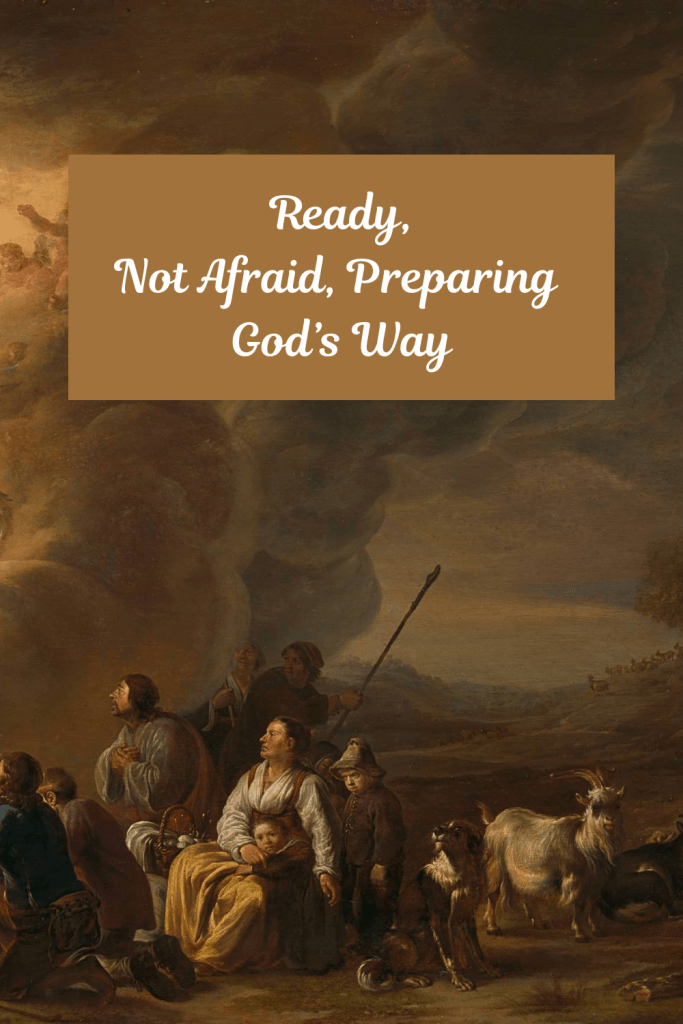
Ready, Not Afraid — Preparing God’s Way

When Jesus talked about “wars and rumors of wars” (Matthew 24:6), He didn’t say to panic or stockpile. He said:

“See that you are not troubled… the end is not yet.”

God’s preparation is spiritual, not survivalist. Here’s what Scripture shows about how we’re to get ready:


1. Get your heart right with God

“Repent… and turn to God, so that your sins may be wiped out.” — Acts 3:19

Preparation begins with repentance, humility, and a restored relationship with God, not fear-based actions.


2. Stay spiritually awake

“Therefore keep watch, because you do not know the day or the hour.” — Matthew 25:13

This means living alert, faithful, and obedient, not distracted or spiritually asleep.


3. Walk in love, not panic

“Because lawlessness will increase, the love of many will grow cold.” — Matthew 24:12

God’s people are called to grow warmer, not colder, more compassionate, not more fearful.


4. Trust God, not circumstances

“God has not given us a spirit of fear, but of power, love, and a sound mind.” — 2 Timothy 1:7

Fear is not preparation. Faith is.


5. Endure and stay faithful

“The one who stands firm to the end will be saved.” — Matthew 24:13

God’s instruction is endurance, steady faith, obedience, and hope

God does not prepare His people by warning them to survive destruction,
He prepares them by transforming their hearts so they’re ready to meet Him, whether in crisis or in peace.

Grow from the inside

Key Scriptures About Inner Growth

1. Luke 17:21

“The kingdom of God is within you.”
This shows that God’s work begins internally, in the heart, before it is seen outwardly.

2. 2 Corinthians 4:16

“Though our outward man perish, yet the inward man is renewed day by day.”
Spiritual growth happens on the inside, even when external circumstances don’t change.

3. Ephesians 3:16

“That he would grant you… to be strengthened with might by his Spirit in the inner man.”
True strength and growth come from the Spirit working within us.

4. Romans 12:2

“Be transformed by the renewing of your mind.”
Transformation starts internally, with how we think and believe.

5. Proverbs 4:23

“Guard your heart, for everything you do flows from it.”
What grows inside the heart determines what shows up in life.

Simple Biblical Summary

The Bible teaches that real change starts in the heart, mind, and spirit, and then flows outward into actions, character, and lifestyle.

A United Kingdom: The Biblical Appearance of Jesus

When Jesus appeared in Scripture, He did not come to establish a divided rule or an earthly hierarchy shaped by power struggles. Instead, His presence revealed one united Kingdom under God’s authority, a Kingdom built on truth, love, righteousness, and obedience to the Father.

From the beginning of His ministry, Jesus proclaimed, “The kingdom of God is at hand” (Mark 1:15). This Kingdom was not bound by borders, culture, or status. Jews and Gentiles, the rich and the poor, the broken and the restored were all invited into one body. Jesus stood as both King and Servant, showing that unity in God’s Kingdom flows from humility and love, not domination.

Through His teachings, miracles, death, and resurrection, Jesus revealed a Kingdom where God’s will reigns fully, on earth as it is in heaven (Matthew 6:10). He called His followers to live as citizens of this united Kingdom, walking in forgiveness, justice, and peace. In Christ, division gives way to reconciliation, and separation is replaced with belonging.

The biblical appearance of Jesus reminds us that God’s Kingdom is not fragmented. It is one Kingdom, one King, and one people, united under the lordship of Christ, now and forever.