"Volumeguide 2, your ultimate hub for fashion, hobbies and inspiration needed to find freedom to grow, be inspired and get motivated into an overflowing life."

Posts tagged ‘love’

Apostle Pauls Purification

Paul purified himself through a Jewish purification ceremony connected with a vow, described in Acts 21:23–26.

When Paul returned to Jerusalem, the elders told him that there were concerns about what people were saying about him. They advised him to join four men who had taken a vow and to purify himself along with them.

Paul did the following:

  1. He joined the four men who had taken a vow.
  2. He purified himself ceremonially according to Jewish practice.
  3. He went into the temple to participate in the purification.
  4. He paid the expenses associated with the men completing their vow.
  5. He waited for the prescribed period until the purification was completed.

The key passage is:

“Then Paul took the men, and the next day purifying himself with them entered into the temple, to signify the accomplishment of the days of purification…”
Acts 21:26 (KJV)

What does this mean spiritually?

Paul’s purification here was not about being cleansed from sin in order to receive salvation. Paul already taught that salvation comes through faith in Christ, not through ceremonial works (see Galatians 2:16).

Instead, this was a ceremonial Jewish purification that demonstrated respect for Jewish customs and helped avoid unnecessary offense among Jewish believers.

There is an important distinction:

Ceremonial purification ≠ spiritual cleansing from sin.

The New Testament teaches that believers are spiritually cleansed through Christ:

“…the blood of Jesus Christ his Son cleanseth us from all sin.”
1 John 1:7

So Paul participated in an outward purification practice, while the deeper spiritual cleansing of a believer comes through Jesus Christ.

The account in Acts 21:23–26 connects Paul’s purification with a Jewish Nazirite-type vow. Scripture does not give every step Paul personally performed, so we have to distinguish what Acts explicitly says from what the Old Testament law prescribed.

Paul’s purification process

1. He joined four men who had taken a vow.
The Jerusalem elders told Paul to take these men and participate with them in their purification. — Acts 21:23–24

2. He purified himself ceremonially.
Acts says that Paul entered the temple “purifying himself with them.” This was ceremonial purification, not the forgiveness of sin. — Acts 21:26

3. The purification involved a specified period of time.
The men were completing the “days of purification.” Paul waited until those days were fulfilled. — Acts 21:26

4. Sacrifices were associated with completing the vow.
The background for this type of vow is found in Numbers 6:1–21. When a Nazirite completed his period of separation, he brought offerings to the Lord, including a lamb, a ram, and other prescribed offerings.

5. Paul paid the expenses for the men.
The elders specifically told Paul to “be at charges with them” so that they could shave their heads and complete the vow. — Acts 21:24

What was the purpose?

This is important: Paul was not trying to earn salvation or become spiritually clean before God through this ceremony.

Paul was demonstrating that he respected the Jewish law and customs and was not teaching Jews to abandon Moses, as some people had accused him of doing. Acts 21:24 says the purpose was to show that the accusations against him were not true.

There is also an interesting connection to Numbers 6. A person who took a Nazirite vow separated himself to the Lord for a particular period. At the completion of the vow, there was a ceremony involving purification, shaving the head, and sacrifices.

The bigger spiritual picture

Paul could participate in an outward Jewish purification ceremony while still teaching that true spiritual cleansing comes through Christ.

That distinction is powerful:

Outward purification:
Water, temple ceremony, prescribed period, sacrifices.

Spiritual purification:
Repentance, faith in Christ, and the cleansing power of His blood.

Hebrews 9:13–14 makes this contrast especially clear: the Old Testament ceremonies could “sanctify to the purifying of the flesh,” while Christ’s blood cleanses the conscience.

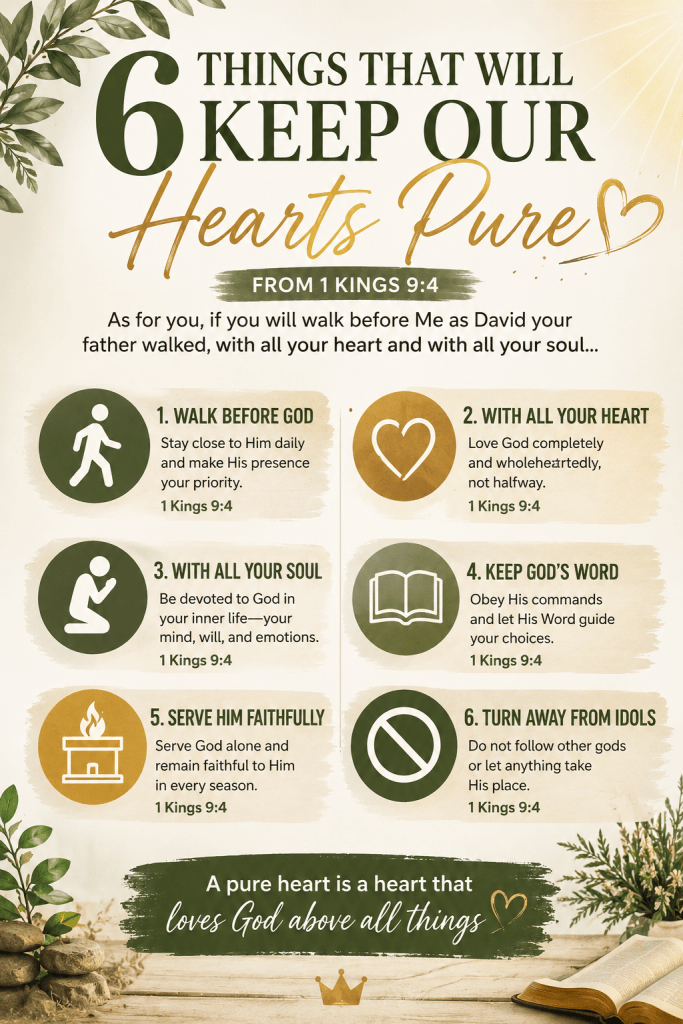
So when Acts says Paul “purified himself,” it does not mean Paul was spiritually unclean or needed to get saved again. It refers to a ceremonial purification associated with Jewish vows and temple worship. When studying, 1 Kings 9:4 and the idea of keeping your heart pure, there is a really interesting connection between ceremonial purity and purity of the heart in Scripture.

Image

PURE HEARTS

“Forever My Husband, Now in the Presence of the Lord”

My Husband, Edward

Today, I honor the life of my beloved husband, Edward, a man who was deeply loved and will never be forgotten.

He was more than just my husband. He was my companion, my strength, my covering, and my friend. Through every season of life, we walked together, and his love left a mark on my heart that time can never erase.

Though my heart grieves, I find peace in knowing that he is now at home with the Lord. As it is written in 2 Corinthians 5:8, “to be absent from the body is to be present with the Lord.” He is no longer in pain, no longer burdened, he is at rest in God’s presence.

I hold on to the promise in 1 Thessalonians 4:13–14, that we do not grieve without hope. This goodbye is not forever. One day, we will meet again.

Thank you for loving me, for standing by me, and for being the man God called you to be. Your life mattered. Your love mattered. And your memory will live on in me.

Until we meet again, my love…
Rest in the arms of the Lord.

God Is Still Faithful to Us

In a world that shifts faster than we can catch our breath, it’s easy to wonder where God is in the middle of it all. Life brings unexpected storms, long waiting seasons, and moments that make us question everything we thought we understood. But here’s the truth that has never changed: God is still faithful to us. Not sometimes. Not only when we feel deserving. Not only when life is calm. Always.

From Genesis to Revelation, God’s faithfulness is the thread that weaves through every story, every promise, and every miracle. He was faithful to Abraham when the promise seemed impossible. He was faithful to Joseph through betrayal, false accusation, and imprisonment. He was faithful to David when he was overlooked. He was loyal to the disciples when they were afraid and uncertain. And that same God, unchanging and unwavering, is still faithful today.

His faithfulness isn’t based on our perfection; it’s rooted in His character. Scripture says, “If we are faithless, He remains faithful, for He cannot deny Himself” (2 Timothy 2:13). In other words, God doesn’t just do faithful things, He is faithful. It’s His nature. His identity. His promise sealed by eternity itself.

Maybe you’re walking through a season where you can’t see the full picture yet. Or the breakthrough hasn’t come. The healing hasn’t happened. Maybe the door hasn’t opened. But even here, even now, God is working behind the scenes, aligning, protecting, shaping, guiding, preparing, and sustaining you in ways you can’t yet see.

Faithfulness doesn’t always look like a quick rescue.
Sometimes it looks like strength to endure.
Sometimes it looks like peace in the middle.
Sometimes it looks like divine timing you didn’t expect.
Sometimes it looks like a “not yet” that leads to a greater “yes.”

But every step is covered by His unfailing love.

So hold on to this truth:
God has not forgotten you.
God has not abandoned you.
God has not changed His mind about you.

The same God who carried you before will carry you again.
The same God who opened doors before will open new ones.
The same God who lifted you out of past battles will lift you out of this one.

And when you look back, you’ll realize, He was faithful the whole time.

May this be your reminder today:
No matter where you are, what you’re facing, or how you feel, God is still faithful to us, yesterday, today, and forever.

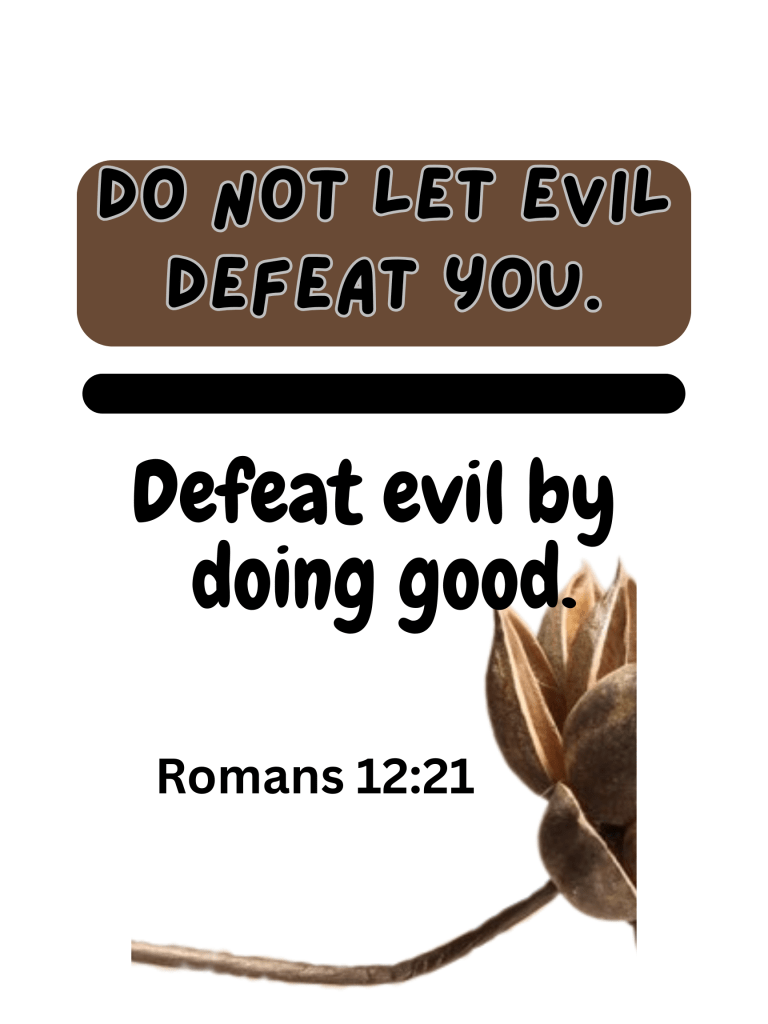
Rise Above: Conquering Evil with Good

Don’t Let Evil Defeat You—Defeat Evil by Doing Good

In a world where negativity can scream louder than kindness, Romans 12:21 gives us a powerful reminder: “Don’t let evil defeat you. Defeat evil by doing good.” This verse isn’t just a call to be “nice”, it’s an invitation to live with strength, intentionality, and spiritual resilience.

Evil manifests in many forms: hurtful words, injustice, discouragement, pressure, temptation, or even the quiet battles within our own hearts. But God never intended for us to fight darkness with more darkness. Instead, He equips us with something far greater, goodness that comes from Him.

Doing good is not weakness. It’s spiritual warfare. Every act of kindness pushes back against despair. Every choice to forgive breaks a chain. Every moment of love plants a seed that outgrows bitterness. Goodness is God’s strategy for victory, and when we choose it, we partner with His power rather than our own.

So today, don’t let the world pull you down to its level. Rise above it. Shine anyway. Love anyway. Serve anyway. Because when you choose good, you don’t just survive, you overcome.

Keep going. Your goodness makes a difference.

Image

God wants you to know

Image

Be Bold

Being bold as a witness for God means standing firm in your faith, even when the world pushes back. It’s speaking truth with love, sharing the gospel confidently, and living a life reflecting Christ’s light. Boldness isn’t about being loud or forceful, it’s about trusting God’s strength, stepping out in faith, and letting His Spirit guide your words and actions. When you stand boldly for God, you inspire others to seek Him, knowing He goes before you and equips you for every moment.

Image

“Cozy Christmas Glow”

NO LOVE NO PEACE

The quote “No Love No Peace, Know Love Know Peace” serves as a profound reminder of how love fosters peace in life and the world. It can:

  • Inspire Reflection: Encourages users to ponder the connection between love and peace.
  • Spread a Positive Message: Acts as a conversation starter or an uplifting reminder in daily life.
  • Offer Versatility: Fits minimalist or bold artistic styles, appealing to a broad audience.

Perfect for gifting or personal use, it resonates deeply with those valuing love, harmony, and meaningful living.

Dreams In Your Heart

This quote encourages you to break free from the limits of fear and follow the path your heart truly desires. It’s a reminder that while fears may try to hold you back, your dreams are what truly guide you toward your purpose. Trust in those dreams, and let them lead you to where you’re meant to be.