"Volumeguide 2, your ultimate hub for fashion, hobbies and inspiration needed to find freedom to grow, be inspired and get motivated into an overflowing life."

Posts tagged ‘spiritual growth’

5 STEPS TO UNDERSTANDING SCRIPTURE

Not just to read them, but grow from them.

1. Pray Before You Read

Ask God for understanding, wisdom, and discernment before opening Scripture. The Bible is spiritual truth, and prayer helps prepare your heart to receive it.

A simple prayer:

“Lord, open my eyes to understand Your truth and help me apply it to my life.”

Biblical foundation:

“If any of you lacks wisdom, let him ask of God…” — James 1:5


2. Understand the Context

Many people misunderstand Scripture because they read one verse without knowing:

  • Who wrote it
  • Who it was written to
  • What was happening historically
  • What comes before and after the passage

For example:
A verse written during war, persecution, exile, or correction may carry a very different meaning than a verse about encouragement or worship.

Good questions to ask:

  • Who is speaking?
  • Who are they speaking to?
  • Why was this written?
  • What is happening in this chapter?

3. Compare Scripture With Scripture

The Bible explains itself. One passage often brings clarity to another.

If a verse seems confusing:

  • Look for similar themes elsewhere
  • Read cross references
  • Study how Jesus and the apostles explained earlier Scriptures

Example:
The Old Testament contains promises, symbols, and prophecies that become clearer in the New Testament.

Biblical foundation:

“Rightly dividing the word of truth.” — 2 Timothy 2:15


4. Focus on the Character of God

The Bible is not only a collection of stories — it reveals God’s nature:

  • His love
  • Justice
  • Mercy
  • Holiness
  • Faithfulness
  • Patience

When studying a passage, ask:

  • What does this teach me about God?
  • What does this teach me about people?
  • What response does God desire?

This changes Bible reading from information into transformation.


5. Apply What You Learn

Understanding grows through obedience. Scripture becomes clearer when it is lived out.

Instead of only asking:

“What does this mean?”

Also ask:

  • How should this change me?
  • What action should I take?
  • What attitude needs correcting?
  • What promise should I trust?

Biblical foundation:

“Be doers of the word, and not hearers only…” — James 1:22


A Simple Bible Study Method

A beginner-friendly approach:

Read

Read the passage slowly.

Observe

Notice repeated words, themes, commands, and emotions.

Interpret

Ask what the author intended to communicate.

Apply

Ask how this truth affects your life today.

Pray

Talk to God about what you learned.


A great place to start for beginners:

  • Gospel of John — to understand Jesus
  • Psalms — for prayer and encouragement
  • Proverbs — for wisdom and daily living
  • James — for practical faith

Consistency matters more than speed. Even one chapter read carefully and prayerfully can change how you think and live.

Rise Above: Conquering Evil with Good

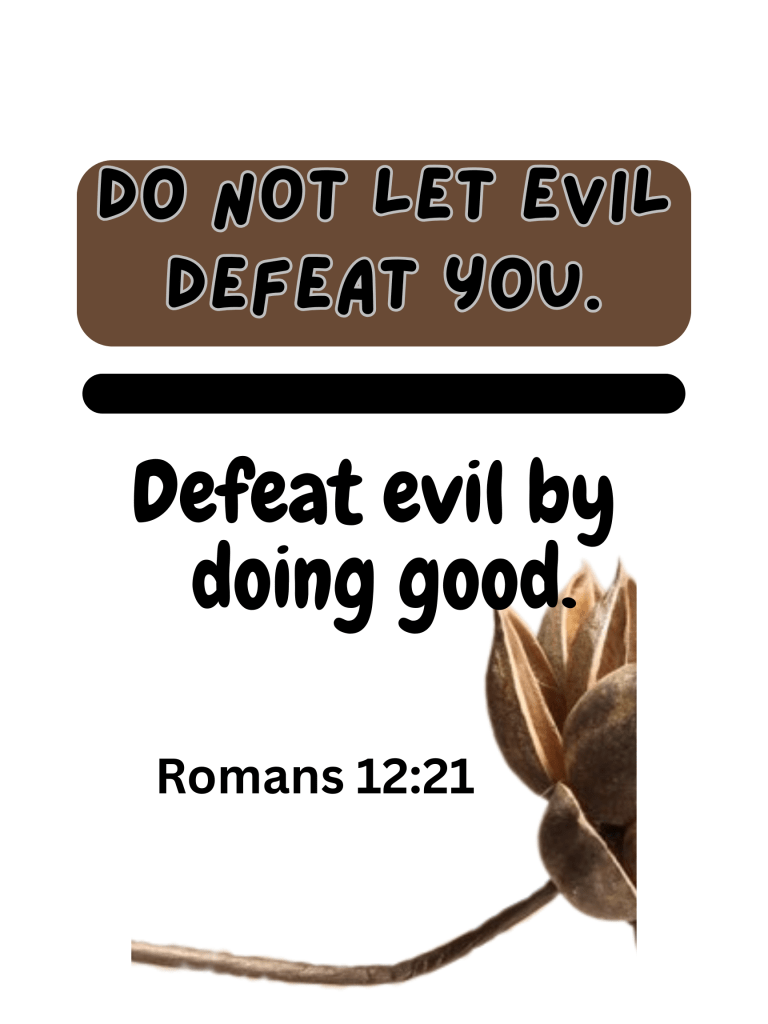
Don’t Let Evil Defeat You—Defeat Evil by Doing Good

In a world where negativity can scream louder than kindness, Romans 12:21 gives us a powerful reminder: “Don’t let evil defeat you. Defeat evil by doing good.” This verse isn’t just a call to be “nice”, it’s an invitation to live with strength, intentionality, and spiritual resilience.

Evil manifests in many forms: hurtful words, injustice, discouragement, pressure, temptation, or even the quiet battles within our own hearts. But God never intended for us to fight darkness with more darkness. Instead, He equips us with something far greater, goodness that comes from Him.

Doing good is not weakness. It’s spiritual warfare. Every act of kindness pushes back against despair. Every choice to forgive breaks a chain. Every moment of love plants a seed that outgrows bitterness. Goodness is God’s strategy for victory, and when we choose it, we partner with His power rather than our own.

So today, don’t let the world pull you down to its level. Rise above it. Shine anyway. Love anyway. Serve anyway. Because when you choose good, you don’t just survive, you overcome.

Keep going. Your goodness makes a difference.

The Extension of the Olive Branch

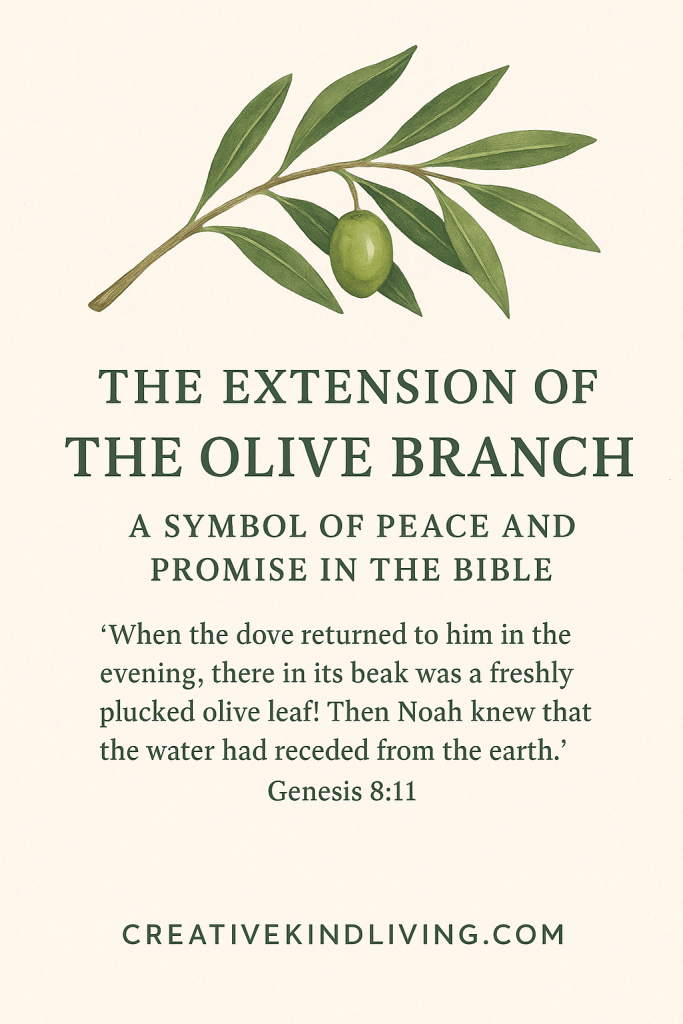
The Extension of the Olive Branch: A Biblical Symbol of Peace and Promise

In a world often marked by conflict, division, and misunderstanding, the image of an olive branch still carries profound meaning. It’s more than just a symbol of peace; it’s a reminder of God’s mercy, renewal, and the promise of a fresh start.

The First Olive Branch: A Sign of Hope

The olive branch first appears in Scripture in Genesis 8:11, when Noah releases a dove from the ark after the flood. The Bible says:

“When the dove returned to him in the evening, there in its beak was a freshly plucked olive leaf! Then Noah knew that the water had receded from the earth.” Genesis 8:11 (NIV)

This simple yet powerful moment marks a turning point in history. The flood had wiped away corruption, and now, through this delicate leaf, God was showing that new life had begun. The olive branch was a sign that His judgment had passed and His mercy was present.

It wasn’t just a sign for Noah; it was a symbol for all humanity. The olive leaf told the story of restoration. It said, “God is not finished. There’s still hope.”

Olive Branches and God’s Covenant

Later in Scripture, the olive tree became a recurring image of God’s relationship with His people. The psalmist writes,

“I am like a green olive tree in the house of God; I trust in the mercy of God forever and ever.” Psalm 52:8 (NKJV)

Here, the olive tree represents a person rooted in God’s presence, flourishing, steadfast, and fruitful. Extending an olive branch to someone else, then, becomes more than a gesture of peace; it’s an act of godly character. It mirrors the mercy God extends to us daily.

Jesus and the Olive Tree

The olive tree continues to appear throughout the New Testament, even in the Garden of Gethsemane, a name that literally means “oil press.” There, among the olive trees, Jesus prayed before His crucifixion. It was the place where the Prince of Peace was pressed in spirit, preparing to extend the greatest act of peace ever known, reconciliation between God and humanity.

Through His sacrifice, Jesus became the ultimate “olive branch” extended to us, a divine invitation to be made right with God and with one another.

Extending the Olive Branch Today

When we choose to forgive, to reach out in love, or to mend broken relationships, we follow in God’s footsteps. Extending the olive branch means laying down pride and picking up peace.

It’s not always easy, but it’s always powerful. In doing so, we become vessels of restoration, carrying forward the same spirit that brought hope to Noah, mercy to Israel, and salvation to us through Christ.

“Blessed are the peacemakers, for they shall be called children of God.”Matthew 5:9

A Final Reflection

The olive branch isn’t just a piece of history; it’s a calling. It invites us to live as people who bring peace wherever we go. Whether that’s offering forgiveness, showing compassion, or simply listening with love, every act of peace plants a new seed of hope.

Just as the dove brought an olive branch to Noah, we too can carry the message that the floodwaters have receded, that new beginnings are possible through God’s grace.


Reflection Question:
Who in your life might need you to extend an olive branch today; and how can you show them the peace of Christ?