"Volumeguide 2, your ultimate hub for fashion, hobbies and inspiration needed to find freedom to grow, be inspired and get motivated into an overflowing life."

Posts tagged ‘PRAYER’

Repentance: An Opportunity for a New Beginning with God

Repentance is not the end of your story. It is an opportunity to experience God’s mercy, restoration, forgiveness, and a renewed relationship with Him.

Key Scripture: Acts 3:19 (KJV)

“Repent ye therefore, and be converted, that your sins may be blotted out, when the times of refreshing shall come from the presence of the Lord.”

Introduction: The Gift of Another Opportunity

Every day that God allows us to wake up is another opportunity to examine our hearts, turn away from sin, and draw closer to Him. Repentance is one of the greatest opportunities God has given humanity. It is not simply an admission of wrongdoing; it is a heartfelt decision to turn from sin and return to the will of God.

Many people associate repentance with guilt, shame, and punishment. However, throughout Scripture, we discover that repentance is also an invitation to experience God’s forgiveness, spiritual renewal, and the transformation of our lives.

God does not call us to repentance because He desires our destruction. He calls us because He desires that we turn from sin and receive life.

2 Peter 3:9 (KJV) reminds us:

“The Lord is not slack concerning his promise, as some men count slackness; but is longsuffering to us-ward, not willing that any should perish, but that all should come to repentance.”

What a powerful demonstration of God’s love! Even when we fall short of His glory, His mercy provides an opportunity to turn back to Him.

1. Repentance Is an Opportunity to Return to God

Throughout the Bible, God continually called His people to return to Him. Even when Israel wandered away through disobedience and rebellion, God extended an invitation to repent.

In Joel 2:12–13 (KJV), the Lord declares:

“Therefore also now, saith the LORD, turn ye even to me with all your heart, and with fasting, and with weeping, and with mourning: And rend your heart, and not your garments, and turn unto the LORD your God: for he is gracious and merciful, slow to anger, and of great kindness, and repenteth him of the evil.”

God was not interested in outward appearances alone. He wanted the hearts of His people.

True repentance begins within. It requires us to acknowledge where we have strayed, surrender our pride, and sincerely desire to walk in righteousness.

Isaiah 55:6–7 (KJV) encourages us:

“Seek ye the LORD while he may be found, call ye upon him while he is near: Let the wicked forsake his way, and the unrighteous man his thoughts: and let him return unto the LORD, and he will have mercy upon him; and to our God, for he will abundantly pardon.”

Notice the promise: God will abundantly pardon.

Repentance gives us the opportunity to return to the One who has never stopped being merciful.

2. Repentance Is an Opportunity to Receive Forgiveness

One of the most beautiful promises in Scripture is that God is willing to forgive those who sincerely confess and turn from their sins.

1 John 1:9 (KJV) declares:

“If we confess our sins, he is faithful and just to forgive us our sins, and to cleanse us from all unrighteousness.”

God’s forgiveness is not limited by the greatness of our past mistakes. Through Jesus Christ, forgiveness is available to those who come to Him in faith and repentance.

David understood the importance of seeking God’s mercy after he sinned. In Psalm 51, he cried out for forgiveness and spiritual cleansing.

Psalm 51:10–12 (KJV) says:

“Create in me a clean heart, O God; and renew a right spirit within me. Cast me not away from thy presence; and take not thy holy spirit from me. Restore unto me the joy of thy salvation; and uphold me with thy free spirit.”

David did not merely ask God to remove the consequences of his wrongdoing. He desired a clean heart and a renewed spirit.

This teaches us that repentance should be more than wanting relief from guilt. It should create a sincere desire to become more pleasing to God.

Proverbs 28:13 (KJV) reinforces this truth:

“He that covereth his sins shall not prosper: but whoso confesseth and forsaketh them shall have mercy.”

There is freedom in confession, mercy in turning away from sin, and hope in God’s forgiveness.

3. Repentance Is an Opportunity for Spiritual Transformation

Repentance is not merely saying, “Lord, I am sorry.” It involves a change of heart and direction.

The Greek word commonly translated as repentance, metanoia, conveys a change of mind. Biblical repentance is reflected in a changed attitude toward sin and a life that increasingly follows God’s ways.

Jesus began His public preaching with a clear message.

Matthew 4:17 (KJV) states:

“From that time Jesus began to preach, and to say, Repent: for the kingdom of heaven is at hand.”

Repentance was central to the message of Jesus because entering into the life God calls us to requires turning away from the ways of darkness.

The Apostle Paul also taught that genuine repentance should produce visible evidence in our lives.

Acts 26:20 (KJV) says:

“But shewed first unto them of Damascus, and at Jerusalem, and throughout all the coasts of Judaea, and then to the Gentiles, that they should repent and turn to God, and do works meet for repentance.”

Repentance is not about achieving perfection through our own strength. It is about allowing God to transform our hearts and guide our actions.

Romans 12:2 (KJV) tells us:

“And be not conformed to this world: but be ye transformed by the renewing of your mind, that ye may prove what is that good, and acceptable, and perfect, will of God.”

When we repent, we open our hearts to correction, spiritual growth, and a renewed commitment to God’s Word.

4. Repentance Is an Opportunity to Experience God’s Mercy

God’s mercy is one of the strongest themes throughout Scripture.

Consider the people of Nineveh. When Jonah preached that judgment was approaching, the people humbled themselves, fasted, and turned from their evil ways.

Jonah 3:10 (KJV) records:

“And God saw their works, that they turned from their evil way; and God repented of the evil, that he had said that he would do unto them; and he did it not.”

Nineveh’s response demonstrates the importance of taking God’s warnings seriously. Their repentance was met with mercy.

God also speaks through Ezekiel concerning His desire for people to turn from wickedness and live.

Ezekiel 18:30–32 (KJV) declares:

“Repent, and turn yourselves from all your transgressions; so iniquity shall not be your ruin. Cast away from you all your transgressions, whereby ye have transgressed; and make you a new heart and a new spirit: for why will ye die, O house of Israel? For I have no pleasure in the death of him that dieth, saith the Lord GOD: wherefore turn yourselves, and live ye.”

These words reveal something extraordinary about God’s character: He takes no pleasure in the destruction of the wicked.

His call to repentance is a call to life.

Lamentations 3:22–23 (KJV) reminds us:

“It is of the LORD’s mercies that we are not consumed, because his compassions fail not. They are new every morning: great is thy faithfulness.”

Every new morning is another reminder that God’s compassion has not failed.

5. Repentance Is an Opportunity to Be Restored

One of the most powerful illustrations of repentance is found in the parable of the prodigal son in Luke 15:11–32.

The younger son left his father’s house, wasted his inheritance, and eventually found himself in desperate circumstances.

When he recognized his condition, he made a life-changing decision.

Luke 15:18 (KJV) says:

“I will arise and go to my father, and will say unto him, Father, I have sinned against heaven, and before thee.”

The son understood that he had sinned. But instead of remaining in his broken condition, he decided to return home.

What happened next reveals the compassion of the father.

Luke 15:20 (KJV) declares:

“And he arose, and came to his father. But when he was yet a great way off, his father saw him, and had compassion, and ran, and fell on his neck, and kissed him.”

The father welcomed his returning son with love and compassion.

This parable beautifully illustrates God’s willingness to receive those who repent and return to Him.

Luke 15:7 (KJV) says:

“I say unto you, that likewise joy shall be in heaven over one sinner that repenteth, more than over ninety and nine just persons, which need no repentance.”

Heaven rejoices over repentance!

What we may view as a painful admission of failure, heaven recognizes as a reason for rejoicing when a sinner returns to God.

6. Repentance Is an Opportunity to Grow Through Godly Sorrow

Not every feeling of regret leads to genuine repentance.

Sometimes people are sorry because they have been caught, embarrassed, or forced to face the consequences of their decisions.

Godly sorrow is different. It recognizes that sin offends God and creates a sincere desire to change.

2 Corinthians 7:10 (KJV) explains:

“For godly sorrow worketh repentance to salvation not to be repented of: but the sorrow of the world worketh death.”

Godly sorrow moves us toward God rather than leaving us trapped in despair.

Repentance requires humility, honesty, and a willingness to surrender our own ways.

James 4:8–10 (KJV) instructs:

“Draw nigh to God, and he will draw nigh to you. Cleanse your hands, ye sinners; and purify your hearts, ye double minded. Be afflicted, and mourn, and weep: let your laughter be turned to mourning, and your joy to heaviness. Humble yourselves in the sight of the Lord, and he shall lift you up.”

When we humble ourselves before God, we position ourselves to receive His grace and guidance.

Repentance may begin with tears, but it can lead to renewed joy and peace in God’s presence.

7. Repentance Is an Opportunity We Should Not Delay

One of the greatest dangers in our spiritual lives is assuming that we will always have another opportunity to repent.

Scripture repeatedly encourages us to respond to God while we have the opportunity.

Hebrews 3:15 (KJV) says:

“To day if ye will hear his voice, harden not your hearts, as in the provocation.”

Likewise, 2 Corinthians 6:2 (KJV) declares:

“Behold, now is the accepted time; behold, now is the day of salvation.”

We should never become so comfortable with sin that we ignore the conviction of the Holy Spirit.

Jesus Himself warned about the importance of repentance.

Luke 13:3 (KJV) says:

“I tell you, Nay: but, except ye repent, ye shall all likewise perish.”

This warning reminds us that repentance is not an optional spiritual exercise. It is an essential response to God’s call.

The good news is that God’s grace offers us the opportunity to respond today.

8. Repentance Is an Opportunity for Refreshing and Renewal

Repentance does not simply involve leaving something behind. It also allows us to move forward in a renewed relationship with God.

We return to the promise found in Acts 3:19:

“Repent ye therefore, and be converted, that your sins may be blotted out, when the times of refreshing shall come from the presence of the Lord.”

What an encouraging promise!

Through repentance and turning to God, we find forgiveness and the refreshing that comes from His presence.

Jesus also tells us in Revelation 3:19 (KJV):

“As many as I love, I rebuke and chasten: be zealous therefore, and repent.”

Even God’s correction can be an expression of His love.

He corrects us not to encourage us to remain in sin, but to call us back into fellowship and obedience.

And through Christ, we have the promise of a new life.

2 Corinthians 5:17 (KJV) declares:

“Therefore if any man be in Christ, he is a new creature: old things are passed away; behold, all things are become new.”

Our past does not have to determine our spiritual future. Through Jesus Christ, we can walk in newness of life.

9. Repentance Is an Opportunity to Become a Testimony of God’s Grace

When God forgives and transforms us, our lives can become a testimony that encourages others to seek Him.

Consider the Apostle Peter, who denied Jesus three times. Although Peter experienced deep sorrow over his failure, his story did not end in defeat.

After His resurrection, Jesus restored Peter and instructed him to care for His sheep (John 21:15–17).

Peter later boldly proclaimed the gospel, including the call to repentance.

Acts 2:38 (KJV) records:

“Then Peter said unto them, Repent, and be baptized every one of you in the name of Jesus Christ for the remission of sins, and ye shall receive the gift of the Holy Ghost.”

The man who once denied knowing Jesus became a courageous witness for Him.

Peter’s story reminds us that failure does not have to be the final chapter of our lives.

God can use a repentant heart, a restored life, and a willing spirit for His glory.

Psalm 51:13 (KJV) says:

“Then will I teach transgressors thy ways; and sinners shall be converted unto thee.”

David understood that after receiving God’s mercy, he had a responsibility to help others understand the ways of the Lord.

Our experiences of repentance and restoration can become powerful testimonies of God’s faithfulness.

Conclusion: Repentance Is an Invitation, Not a Rejection

Repentance is an opportunity to make things right with God, to surrender our sinful ways, and to embrace the life He desires for us.

It is an opportunity to exchange rebellion for obedience, pride for humility, and spiritual distance for renewed fellowship with the Lord.

We should never mistake God’s patience for His approval of sin. His patience is an expression of mercy, giving people the opportunity to turn toward Him.

Romans 2:4 (KJV) asks:

“Or despisest thou the riches of his goodness and forbearance and longsuffering; not knowing that the goodness of God leadeth thee to repentance?”

God’s goodness should move our hearts toward repentance.

Perhaps you have wandered away from your faith. Perhaps you have allowed disappointment, distractions, pride, or disobedience to weaken your relationship with God.

Whatever the situation, His Word still calls you to return.

Hosea 14:1 (KJV) says:

“O Israel, return unto the LORD thy God; for thou hast fallen by thine iniquity.”

And Psalm 86:5 (KJV) reminds us:

“For thou, Lord, art good, and ready to forgive; and plenteous in mercy unto all them that call upon thee.”

Do not allow yesterday’s mistakes to keep you from responding to God’s call today.

Repentance is not merely an opportunity to leave your past behind. It is an opportunity to turn toward God, receive His forgiveness, and begin walking in the purpose He has prepared for your life.

The opportunity to repent is a gift of grace. Receive it with humility, respond with faith, and allow God to continue His transforming work within you.

A Prayer of Repentance and Renewal

Heavenly Father,

Thank You for Your mercy, patience, and unfailing love. Thank You for giving us the opportunity to repent and return to You.

Lord, search our hearts and reveal anything that is not pleasing in Your sight. Forgive us for our sins, our disobedience, and the times we have allowed our own desires to lead us away from Your truth.

Create in us clean hearts and renew right spirits within us. Teach us to walk in humility, righteousness, and obedience to Your Word.

Help us never to take Your grace for granted. Let our repentance be sincere, our faith steadfast, and our lives living testimonies of Your goodness.

Thank You for the forgiveness and new life made possible through Jesus Christ.

In Jesus’ mighty name, Amen.

Scriptures for Personal Reflection

  • Acts 3:19 — Repentance and spiritual refreshing.
  • 2 Peter 3:9 — God’s patience and desire for repentance.
  • Psalm 51:10 — A clean heart and renewed spirit.
  • Isaiah 55:7 — Returning to God’s abundant mercy.
  • 1 John 1:9 — Confession, forgiveness, and cleansing.
  • Proverbs 28:13 — Confessing and forsaking sin.
  • Ezekiel 18:32 — God’s invitation to turn and live.
  • Luke 15:7 — Heaven rejoices over repentance.
  • 2 Corinthians 7:10 — Godly sorrow that produces repentance.
  • Romans 2:4 — God’s goodness leads us to repentance.

A Final Thought for the Reader

When God gives you an opportunity to repent, He is giving you an opportunity to change direction. Do not waste that opportunity by holding on to what He is calling you to surrender. His mercy is greater than your mistakes, His grace is sufficient, and His Word is able to guide you into a renewed life of faith and obedienc


Let go and let God interpret the dreams

The Bible has quite a bit to say about dreams, visions, and interpretation. Scripture shows that God can use dreams to communicate, but it also teaches us to be discerning rather than assuming every dream is a message from God.

🌙 1. God can speak through dreams

One of the clearest passages is:

“For God speaketh once, yea twice, yet man perceiveth it not. In a dream, in a vision of the night…”
— Job 33:14–15 (KJV)

This tells us that dreams can be one way God gets our attention.

In the Bible, God used dreams to communicate with people such as Joseph, Daniel, Jacob, and Solomon.

🔎 2. God gives the interpretation

A very important biblical principle is that the ability to interpret a dream ultimately comes from God—not human wisdom.

Joseph told Pharaoh:

“It is not in me: God shall give Pharaoh an answer of peace.”
— Genesis 41:16

Daniel said something similar when interpreting Nebuchadnezzar’s dream:

“There is a God in heaven that revealeth secrets.”
— Daniel 2:28

So biblical dream interpretation isn’t about simply assigning a meaning to every symbol. It is about seeking God for understanding.

📖 3. Daniel is a major example

Daniel was specifically given the ability to understand dreams and visions.

Daniel 1:17 says:

“God gave them knowledge and skill in all learning and wisdom: and Daniel had understanding in all visions and dreams.”

Later, Daniel prayed before interpreting the king’s dream (Daniel 2:17–23). He sought God first.

That’s an important lesson: pray before interpreting.

⚠️ 4. Not every dream necessarily comes from God

The Bible also gives us reason to be careful.

Ecclesiastes 5:3 says:

“For a dream cometh through the multitude of business…”

In other words, some dreams can arise from the things occupying our minds.

And Jeremiah warns about people claiming that their dreams are automatically messages from God:

“I am against the prophets, saith the LORD, that use their tongues, and say, He saith.”
— Jeremiah 23:31

So we shouldn’t automatically say, “I dreamed it, therefore God told me.”

✝️ 5. Dreams must agree with God’s Word

This is probably the most important test.

Isaiah 8:20 says:

“To the law and to the testimony: if they speak not according to this word, it is because there is no light in them.”

A dream should never be used to contradict Scripture.

If someone believes a dream tells them to do something that clearly violates God’s Word, the dream is not a higher authority than Scripture.

🕊️ 6. The Holy Spirit can give understanding

The New Testament also speaks about visions and prophetic revelation.

Peter quoted Joel:

“Your young men shall see visions, and your old men shall dream dreams.”
— Acts 2:17

But Scripture also tells believers to test spiritual claims:

“Prove all things; hold fast that which is good.”
— 1 Thessalonians 5:21

And:

“Beloved, believe not every spirit, but try the spirits whether they are of God.”
— 1 John 4:1

🌿 A biblical way to approach a dream

If you have a dream that you believe may have spiritual significance, I would approach it this way:

  1. Write the dream down while you remember it.
  2. Pray and ask God for wisdom. — James 1:5
  3. Look at the dream in light of Scripture.
  4. Don’t force an interpretation.
  5. Pay attention to the context of your life, but don’t assume every personal concern is a divine message.
  6. Wait for confirmation rather than making an immediate major decision based solely on a dream.
  7. Test the interpretation against God’s character and His Word.

One powerful biblical principle

Genesis 40:8 gives perhaps the simplest answer to the question of dream interpretation:

“Do not interpretations belong to God?”

That is the heart of it.

Dreams may get our attention, but God is the one who gives understanding. And Scripture—not dreams—is the foundation we use to determine what is true.

Image

PURE HEARTS

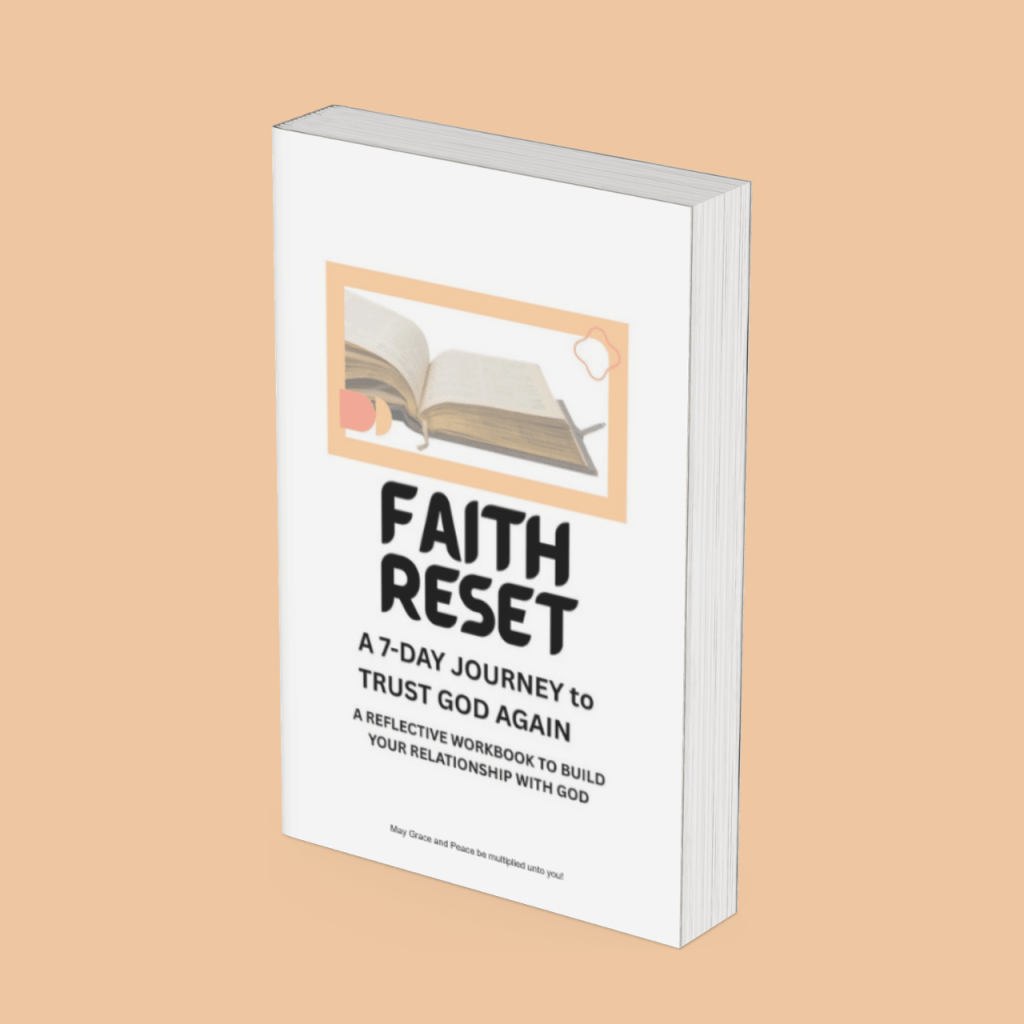
Faith Reset: Choosing to Trust God Again

“Believe in the Lord your God, and you shall be established; believe His prophets, and you shall prosper.” — 2 Chronicles 20:20 (NKJV)

There are seasons in life when our faith feels strong and steady. Then there are seasons when disappointment, stress, fear, or unanswered prayers leave us feeling weary. During those times, we may need what I like to call a faith reset—an intentional return to trusting the God who has always been faithful.

In 2 Chronicles 20, King Jehoshaphat faced an overwhelming situation. A vast army was coming against Judah, and the people were afraid. Instead of relying on their own strength, they turned to God in prayer and sought His guidance. God reminded them that the battle belonged to Him. As the people prepared to move forward, Jehoshaphat encouraged them with these words:

“Believe in the Lord your God, and you shall be established; believe His prophets, and you shall prosper.” (2 Chronicles 20:20)

Faith does not mean pretending that difficulties do not exist. It means choosing to trust God in the middle of them. It is believed that His wisdom is greater than our understanding and that His presence remains with us through every challenge.

The Bible repeatedly calls us to place our confidence in God:

  • Proverbs 3:5–6 – “Trust in the Lord with all your heart, and lean not on your own understanding; in all your ways acknowledge Him, and He shall direct your paths.”
  • Hebrews 11:1 – “Now faith is the substance of things hoped for, the evidence of things not seen.”
  • Isaiah 26:3–4 – “You will keep him in perfect peace, whose mind is stayed on You, because he trusts in You. Trust in the Lord forever, for in Yah, the Lord, is everlasting strength.”
  • Mark 9:23 – “If you can believe, all things are possible to him who believes.”
  • Romans 10:17 – “So then faith comes by hearing, and hearing by the word of God.”

A faith reset is not about having perfect faith. It is about returning to God daily—through Scripture, prayer, worship, and honest conversations with Him. It is remembering His faithfulness in the past and trusting Him with the future.

If your heart feels tired, uncertain, or distant, take courage. God has not moved away from you. He invites you to draw near, trust Him again, and walk forward one step at a time.

This Faith Reset Workbook was created to help you do just that. Through guided reflections, Scripture readings, prayer prompts, and practical exercises, may you rediscover the peace, hope, and confidence that come from placing your faith in God.

Your circumstances may not change overnight, but as you fix your eyes on the Lord, He can renew your heart and strengthen your faith.

Prayer:
Father, help me trust You even when I cannot see the outcome. Strengthen my faith, renew my mind, and remind me of Your faithfulness. Teach me to rely on You each day and to walk confidently in Your promises. In Jesus’ name, Amen.

.

Where in your life is God inviting you to trust Him more deeply today? Honestly reflect, pray, and allow Him to reset your heart toward faith.

How to Develop Strong Praying Habits

Let’s be honest.

Most people don’t struggle with wanting to pray. They struggle with consistency.

You start strong. You feel inspired. Then life gets busy. And before you know it, prayer becomes random instead of regular.

Strong praying habits aren’t built on emotion. They’re built on intention.

If you truly want a stronger prayer life, you need structure, understanding, and discipline. Let’s walk through it.


1. Understand What Prayer Really Is

Prayer is not a performance.
It’s not about perfect words.
It’s not about impressing God.

Prayer is relationship.

In Matthew 6:6, Jesus teaches us to go into our room, shut the door, and pray to our Father in secret. That tells us something powerful: prayer is personal before it is public.

If you see prayer as a religious duty, you’ll avoid it.
If you see prayer as access to your Father, you’ll run toward it.

Your habit changes when your perspective changes.


2. Set a Specific Time — And Protect It

If you don’t schedule prayer, life will schedule something else.

Mark 1:35 shows us that Jesus got up early, while it was still dark, and went to a solitary place to pray.

He didn’t wait to “feel like it.”
He made space for it.

Start small:

  • 10–15 minutes in the morning
  • Or during lunch break
  • Or before bed

Consistency beats intensity.

It’s better to pray 10 focused minutes daily than one emotional hour once a month.


3. Use a Simple Prayer Structure

Many people don’t pray consistently because they don’t know what to say.

Use this simple framework:

A.C.T.S.

  • Adoration – Praise God for who He is.
  • Confession – Be honest about where you fell short.
  • Thanksgiving – Thank Him for what He has done.
  • Supplication – Bring your requests.

This gives your prayer direction instead of randomness.


4. Pray the Word of God

When your words feel weak, pray Scripture.

1 Thessalonians 5:17 says, “Pray without ceasing.”

That doesn’t mean kneel 24 hours a day. It means develop a lifestyle of communication with God.

Turn Scripture into prayer:

  • “Lord, help me trust You with all my heart.” (Proverbs 3:5)
  • “Create in me a clean heart.” (Psalm 51:10)

When you pray the Word, you pray with confidence.


5. Remove Distractions on Purpose

Let’s be real: phones are the biggest prayer killers.

If you are serious about strong praying habits:

  • Put your phone in another room.
  • Turn off notifications.
  • Play soft instrumental worship if needed.

You guard what matters.


6. Track Your Prayers

If you’re building discipline, measure it.

Keep a prayer journal:

  • Date your prayers.
  • Write specific requests.
  • Leave space for answers.

When you look back and see what God has done, your faith grows.

You create evidence of His faithfulness.


7. Stay Consistent Even When You Feel Nothing

This is where maturity comes in.

Some days prayer feels powerful.
Some days it feels dry.

Keep showing up.

James 5:16 says, “The prayer of a righteous person is powerful and effective.”

It doesn’t say “emotional.”
It says powerful.

Your feelings do not determine effectiveness.

Faithfulness does.


Final Encouragement

Strong praying habits are not built in a week.

They are built in quiet mornings.
In tired evenings.
In whispered prayers in the car.
In tearful moments no one else sees.

Start simple. Stay consistent. Grow deeper.

You don’t need to be impressive in prayer.

You just need to be present.

If you commit to showing up daily, your relationship with God will strengthen, and everything else in your life will begin to align from the inside out.

Now here’s the real question:

What time are you going to pray tomorrow?

God Is Still Faithful to Us

In a world that shifts faster than we can catch our breath, it’s easy to wonder where God is in the middle of it all. Life brings unexpected storms, long waiting seasons, and moments that make us question everything we thought we understood. But here’s the truth that has never changed: God is still faithful to us. Not sometimes. Not only when we feel deserving. Not only when life is calm. Always.

From Genesis to Revelation, God’s faithfulness is the thread that weaves through every story, every promise, and every miracle. He was faithful to Abraham when the promise seemed impossible. He was faithful to Joseph through betrayal, false accusation, and imprisonment. He was faithful to David when he was overlooked. He was loyal to the disciples when they were afraid and uncertain. And that same God, unchanging and unwavering, is still faithful today.

His faithfulness isn’t based on our perfection; it’s rooted in His character. Scripture says, “If we are faithless, He remains faithful, for He cannot deny Himself” (2 Timothy 2:13). In other words, God doesn’t just do faithful things, He is faithful. It’s His nature. His identity. His promise sealed by eternity itself.

Maybe you’re walking through a season where you can’t see the full picture yet. Or the breakthrough hasn’t come. The healing hasn’t happened. Maybe the door hasn’t opened. But even here, even now, God is working behind the scenes, aligning, protecting, shaping, guiding, preparing, and sustaining you in ways you can’t yet see.

Faithfulness doesn’t always look like a quick rescue.
Sometimes it looks like strength to endure.
Sometimes it looks like peace in the middle.
Sometimes it looks like divine timing you didn’t expect.
Sometimes it looks like a “not yet” that leads to a greater “yes.”

But every step is covered by His unfailing love.

So hold on to this truth:
God has not forgotten you.
God has not abandoned you.
God has not changed His mind about you.

The same God who carried you before will carry you again.
The same God who opened doors before will open new ones.
The same God who lifted you out of past battles will lift you out of this one.

And when you look back, you’ll realize, He was faithful the whole time.

May this be your reminder today:
No matter where you are, what you’re facing, or how you feel, God is still faithful to us, yesterday, today, and forever.

Living a Lifestyle of Faith

Faith isn’t just something we practice on Sunday. It’s woven into the everyday moments of our lives.

It’s choosing prayer over worry.
It’s speaking kindness when it’s easier to stay silent.
It’s trusting God’s plan when the path feels uncertain.
It’s finding joy in simple blessings and hope in the hardest seasons.

A lifestyle of faith is about letting God’s love guide how we think, create, speak, and live every single day.

What does “living by faith” look like in your daily life? Share below. I’d love to hear your heart.

#FaithLifestyle #WalkByFaith #CreativeKindLiving

A Nation Under God

A Nation Under God

Few stories shine as brightly as the history of our great nation. Woven together with courage, sacrifice, and faith, the United States was founded on principles that echo the heart of freedom, life, liberty, and the pursuit of happiness.

From the first settlers who crossed oceans seeking religious liberty, to the brave hearts who stood on battlefields defending that liberty, we have been a people called to stand for truth and justice. Though our journey has not been perfect, we continue to press forward, leaning not on our own understanding, but on the faith that guided our forefathers.

Our strength is not found solely in our might or wealth, but in the moral compass that points us to God. When we honor Him, we flourish. When we walk in humility and justice, we shine as a beacon of hope to the world.

Today, as we face new challenges and uncertain tomorrows, may we remember who we are and whose we are. Let us recommit to being a nation under God, not just in name, but in heart. Let us live with integrity, pray with boldness, and serve with love. For only with His guidance and presence can we truly thrive.

Let us pray, A Prayer for Our Nation

Heavenly Father,

We thank You for the gift of this great land, a place of promise, opportunity, and freedom. You have blessed us beyond measure, and we humbly acknowledge that every good thing we have comes from Your hand.

Lord, we ask for Your guidance today. As a nation, we need Your wisdom in our leaders, Your peace in our communities, and Your healing in our hearts. Help us to turn from division and pride, and to walk instead in unity and humility. Restore what has been broken, renew what has been forgotten, and revive our hearts to seek You first.

Let Your presence be felt from the highest office to the smallest home. May Your truth guide our decisions, Your love shape our actions, and Your Spirit move mightily among us.

God, bless America, not for our own glory, but so that we might be a light to the world, a people known by our love, and a nation that honors You in all we do.

In Jesus’ name,
Amen.

YOU ALONE ARE GOD

Isaiah 37:20 (ESV):
“So now, O Lord our God, save us from his hand, that all the kingdoms of the earth may know that you alone are the Lord.”

Reference Context

This verse is part of a powerful prayer spoken by King Hezekiah of Judah during a time of great national crisis. The mighty Assyrian empire, under King Sennacherib, had invaded Judah and was threatening Jerusalem. The Assyrian king had mocked God and boasted that no god of any nation had been able to stand against him.

In response, Hezekiah goes to the temple, spreads out the threatening letter before God, and prays. Isaiah 37:20 is the climax of that prayer. Read it: Isaiah 37:16-20


The Great Elaboration (for study use)

1. “So now, O Lord our God”
Hezekiah acknowledges the Lord as their God. This isn’t a distant deity; this is the covenant-keeping God of Israel, the one who has a personal relationship with His people.

2. “Save us from his hand”
Hezekiah is not only asking for a military victory, but also for divine intervention. He knows that Judah has no hope of survival unless God steps in to deliver them.

3. “That all the kingdoms of the earth may know”
This is critical: Hezekiah’s motive isn’t just self-preservation. He wants God to act in a way that brings glory to His name. He wants the world to witness God’s power and know that the God of Israel is not like the powerless idols of other nations.

4. “That You alone are the Lord”
Hezekiah’s prayer ends with a declaration of monotheism (one). There is one true God, and He alone is sovereign. Deliverance would demonstrate that God isn’t one among many, but the only Lord.


APPLY THIS TO YOUR LIFE

This verse is a beautiful example of faith under pressure. It shows us how to pray in a crisis, not just asking for help, but asking that God would be glorified through our situation.

It also reminds us:

  • To turn to God first when we’re threatened or overwhelmed.
  • That God’s deliverance can be a testimony to others.
  • That glorifying God should be the heart of our petitions.

***THANK YOU FOR READING. IF YOU ENJOYED THIS STUDY AS YOUR SUNDAY DEVOTION, THANK YOU AGAIN, AND LET ME KNOW.

THE LORD IS MY STRENGTH

Sunday Devotion: Trust the One Who Sees It All
This Sunday, take a moment to rest in the truth that God sees the full picture of your life, even the parts you don’t understand yet. While we may feel uncertain or impatient, God is working behind the scenes, aligning every detail for your good. Be still in His presence today, and let your heart be reminded: His timing is perfect, His ways are higher, and His love never fails.